
FSA ROADSHOW – Wirral
LEARN : SHARE : GROW


27th September 2025
The first in a series of regional events the FSA Wirral Roadshow is a day of connection and CPD workshops for Forest School Leaders at the beautiful Wirral Country Park, at Thurstaston on the Wirral.
This one day event will run from arrival and registration at 09:15, for an event start at 09:30 until 17:00 and offers a selection of workshops and space for networking and chatting. Each event is different and may have different workshops as each event draws from local providers.
Choice of workshops – Workshop bookings open 8th September 2025 – Noon

Information for the FSA Wirral Roadshow Attendees
Event times
The event is open from 09:00 til 17:30 on the 27th September 2025.
Venue
Wirral Country Park, Station Road, Thurstaston, Wirral CH61 0HN.
What three words /// ///camcorder.expand.reprints
Parking
For those of you who have opted for the subsidised pre booked parking and have provided your reg number, you will need to park in the far car parking bay in the overflow car park. You can access it on the right-hand side of Station Road opposite the main car park entrance, look for signs and stewards on arrival.
If you haven’t opted for the subsidised parking, you can park in any part of the main car park or overflow car park but you will need to enter your car reg and pay for parking (£6 all day).
Not got your subsidised parking ticket yet? Get one here – https://eequ.org/book/car-parking-wirral-roadshow-with-forest-school-association-19865
Schedule
09:00 – Registration opens
09:30 – 11:30 Workshop Session 1
11:30 -12:45 Lunch and networking
12:45 – 2:45 Workshop Session 2
3:00 – 5pm Workshop session 3
5:30pm – Event closes
You can choose one of our provided workshops in each of the three workshop sessions and each session last for approximately 2 hours. The workshops need to be booked in advance on Eequ using the link https://eequ.org/fsaroadshowwirralworkshops2025.
Workshops
You can find out more about each workshop on the individual EEQU listings and you can find each using the links below:
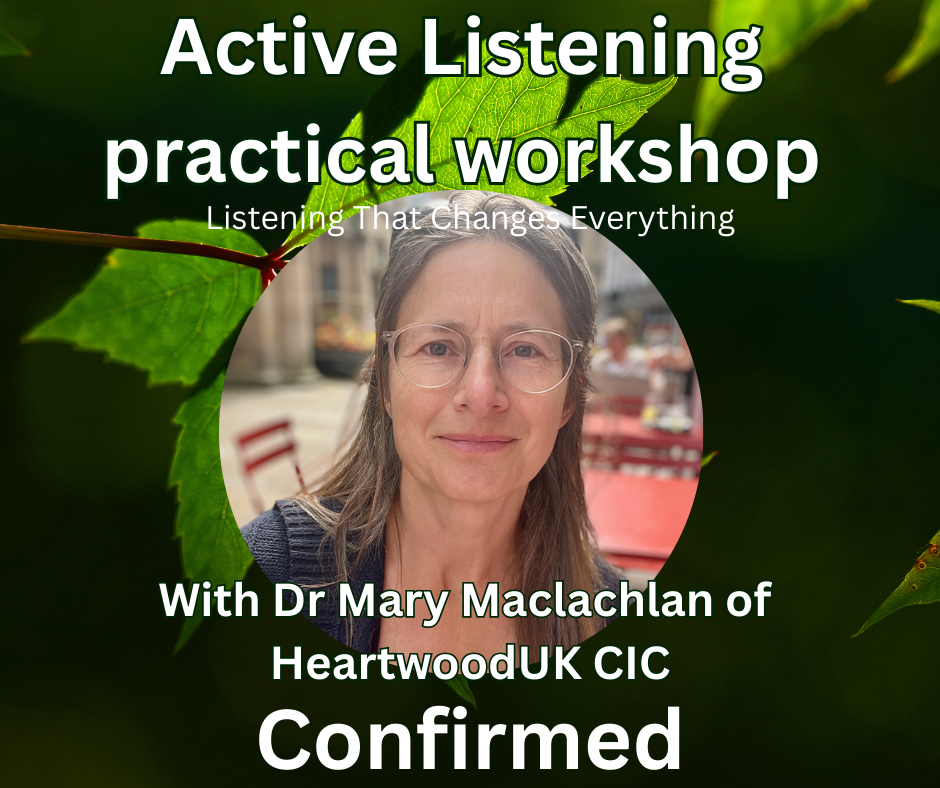
🌳 Active Listening with Dr Mary Maclachlan @heartwooduk
Listening That Changes Everything A skill everybody needs, but is rarely taught. Join Dr Mary Maclachlan and learn how validation and active listening can reduce conflict, support problem-solving, build deeper connections, and boost resilience — in kids and in every relationship. We all think we’re good listeners. And yet, we all know the difference between someone we open up to and someone we avoid. This course teaches a powerful form of listening that helps others process what they’re going through — and arrive at their own best solution. You’ll learn what to say (and what not to say), why common “helpful” responses often backfire, and how to avoid the well-worn habits that shut conversations down. This course blends practical theory, real-life examples, and a few laughs. You’ll walk away not just understanding the skill, but having felt it in action, and be ready to use it.
https://eequ.org/book/active-listening-practical-workshop-with-nic-harding-20074!
09:30-11:30 / 12:45 – 2:45pm / 3pm – 5pm
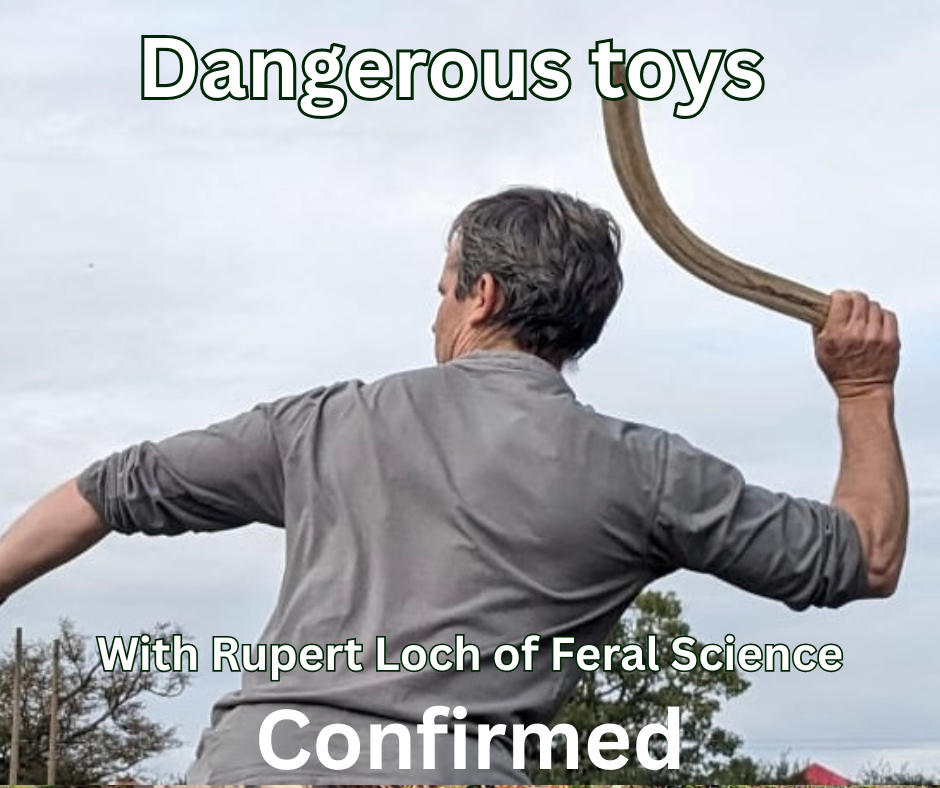
🌳 Dangerous Toys with Rupert Loch @feralscienceltd
Join Rupert Loch for this uplifting workshop learning to create and play with dangerous toys. There is an understandable nervousness about including toys that are perceived as being dangerous within Forest School sessions. In this session you will be introduced to a range of Dangerous Toys including Catapults, Shepherd’s Sling, Atlatl and Dart and Boomerangs and given the chance to use them and understand the risks attached to their use and appropriate precautions. There will be a chance to discuss key aspects of Risk Assessment while making a boomerang and developing a skill you can take back to your own FS sessions (tools, guidance and plywood blanks provided for £8).
🔗https://eequ.org/book/dangerous-toys-feat-boomerang-making-with-nic-harding-20078
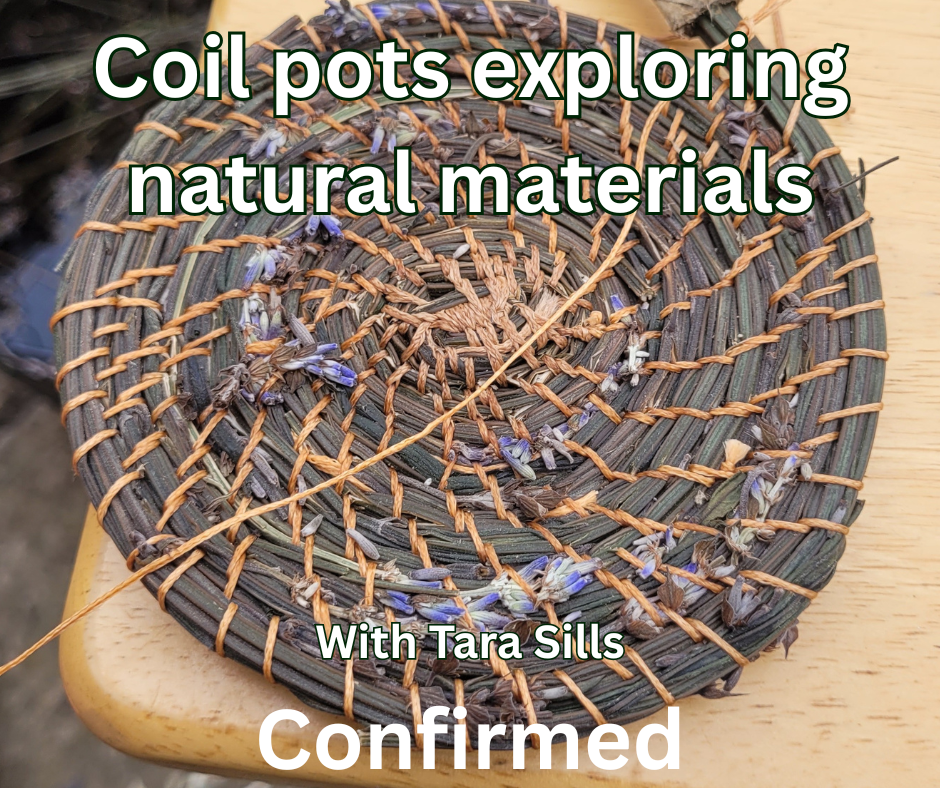
🌳 Lavender Coil Pots with Tara Sills @tarasills
Join Tara Sills for this amazing workshop making coil pots. An opportunity to learn how to make a coil pot/ coaster. To look at natural materials that can be used. Exploring ways and techniques of making a coil pot. A session to learn something that you can either take back to your working sessions or for you to learn a new skill for yourself. Our activity for this session will mainly be using lavender.
09:30-11:30 / 12:45 – 2:45pm / 3pm – 5pm
🔗 https://eequ.org/book/coil-pots-exploring-natural-materials-with-nic-harding-20061
🌳 Natural Paints & Pigments with Kirsty Dexter
Join Kirsty Dexter for this colourful workshop learning to create paints and pigments. This workshop explores the practical history of natural colour-making. Participants will learn how early communities sourced and prepared materials such as ochre, charcoal, and plants to produce pigments, and how these were applied in art, craft, and daily life. The session is fully hands-on: grinding raw materials, mixing binders, and producing usable paints. Participants will then test their creations on different surfaces, gaining insight into both the process and durability of traditional methods. The workshop balances practical activity with discussion of historical and cultural context, linking directly to archaeology, heritage, and environmental knowledge. It is suitable for schools, community groups, and public events, and can be adapted for different ages and learning needs. By the end of the session, participants will leave with both practical samples and a clear understanding of how natural pigments were created and used in the past.
🔗https://eequ.org/book/ancient-paints-and-pigments-with-nic-harding-20066
09:30-11:30 / 12:45 – 2:45pm / 3pm – 5pm
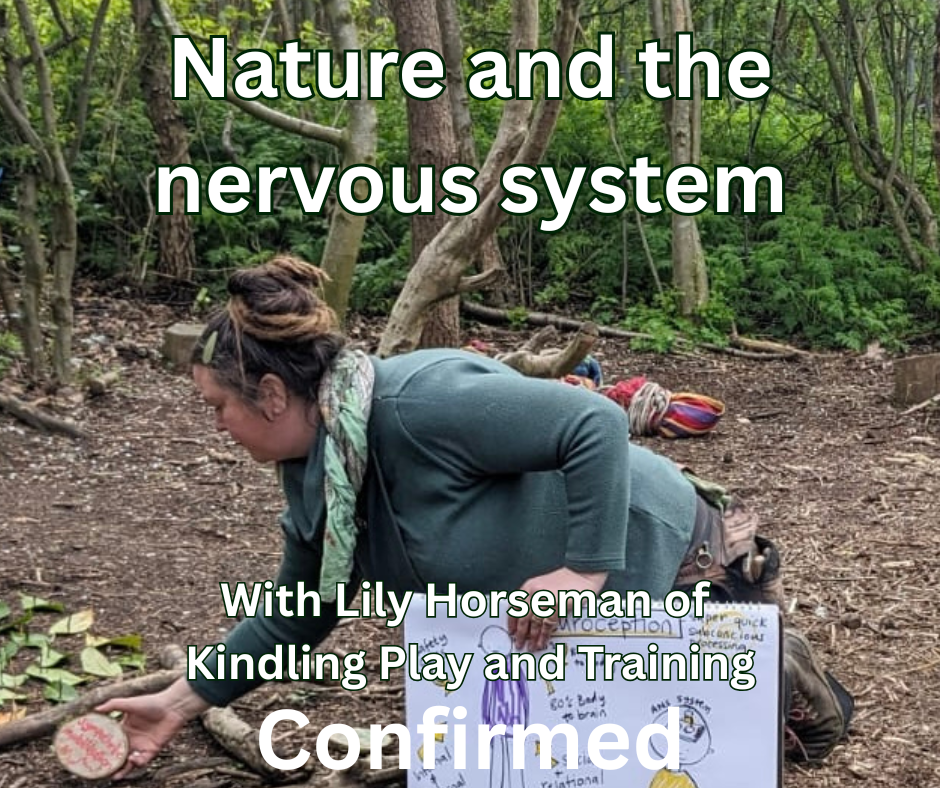
🌳 Nature & the Nervous System with Lily Horseman @kindlinglily
We all know that time in nature feels good for our bodies and brains, but why is that? Why is that not true for everyone? How can we maximise the effect that nature has on our systems? With a little bit of theory and a little bit of time to play and chat with others; participants will discover how exposure to natural environments can reduce stress, improve mood, and promote overall health. We will delve into the science behind biophilia—the innate human affinity for nature—and examine how our nervous system responds to various natural stimuli. The workshop also includes hands-on activities that can be integrated into Forest School to engage the senses, foster a deeper connection to the environment around them. Participants will discover how we can significantly enhance children’s emotional regulation. Through hands-on activities and immersive nature experiences, we will delve into the ways that forests and natural settings can positively influence the nervous system. This workshop offers valuable insights and practical tools to integrate nature into everyday life. The workshop will be led by Lily Horseman. Lily has worked with people in nature for more than 20 years and loves to nerd out about stuff.
🔗 https://eequ.org/book/nature-and-the-nervous-system-with-nic-harding-20077
12:45 – 2:45pm / 3pm – 5pm
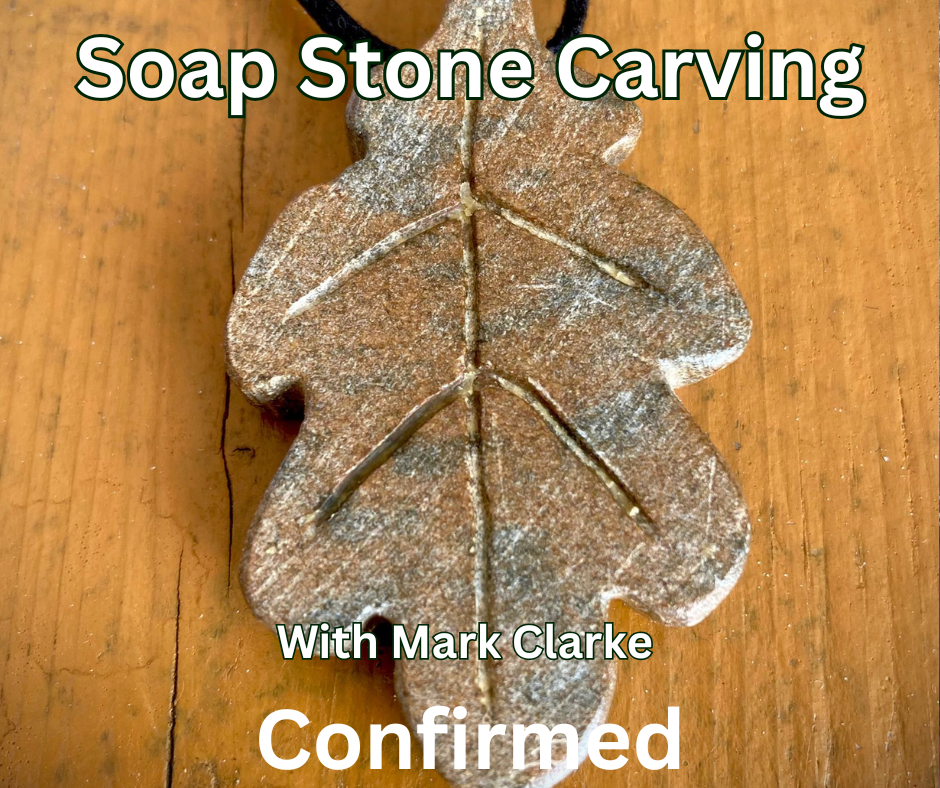
🌳 Soapstone Carving with Mark Clarke @theforestschoolshow
Join Mark Clarke in this new and exciting workshop in soapstone carving. Try your hand at carving stone. Soap stone is a very soft natural material, easily filed, sawn, scratched, drilled, sanded and polished. In a two-hour workshop you will use a range of simple tools to make your own pendent, beads, touch stone, spirit animal or anything else you may revel once you start carving into your stone. Soapstone can be worked by all ages so no matter what age clients you spend your time with, they will all be able to engage with this material.
https://eequ.org/book/soap-stone-carving-with-nic-harding-20069
09:30-11:30 / 12:45 – 2:45pm / 3pm – 5pm
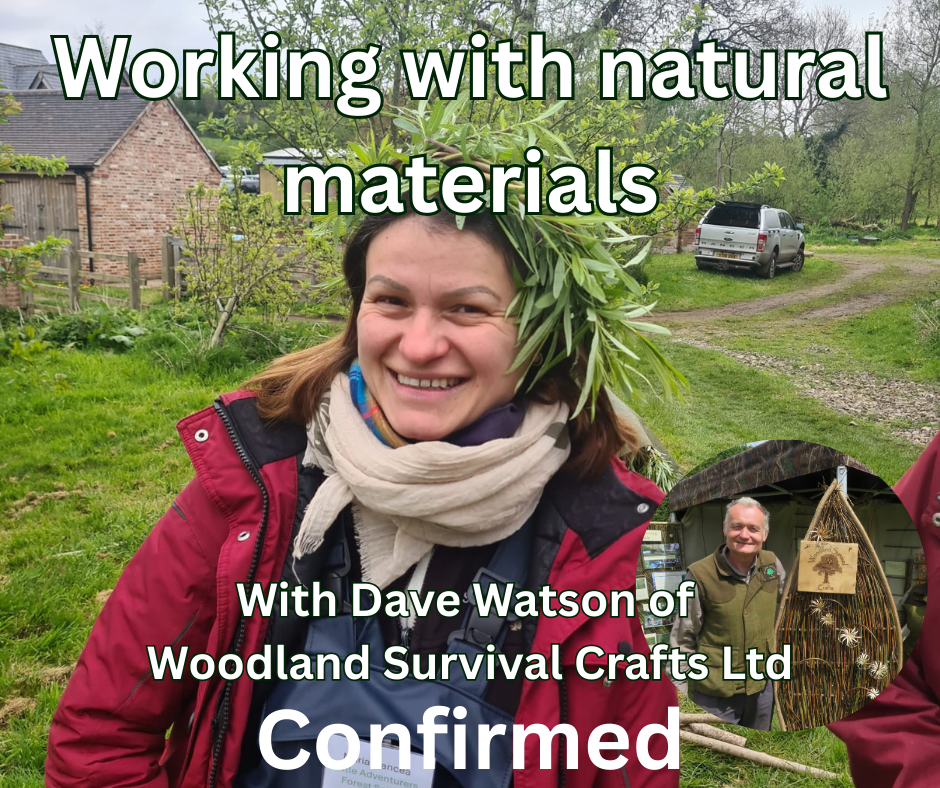
🌳 Working with Natural Materials with Dave Watson @woodlandsurvivalcrafts
Join Dave Watson as he winds a way through the slips, trips and brambles of using natural materials. Look deeper and become more familiar with a variety of natural materials creating cordage and a few simple gadgets and decorative items. This workshop is aimed to help you recognise the properties needed for certain tasks and will give you access to a whole new understanding when finding or choosing materials from nature.
🔗https://eequ.org/book/working-with-natural-materials-with-nic-harding-20079
09:30-11:30 / 12:45 – 2:45pm / 3pm – 5pm
Food
The event is self-catered so please bring your own food. There is a café on site that does a range of small snacks, ice cream and drinks.
Toilets
There is access to toilets on the event site and also in the visitor centre.
What do I need to bring
You will need to bring yourself, some note taking equipment if you choose to make notes, you may wish to bring cameras/phones. You would be advised to bring wet weather gear as we are outside all day and something warm, the site is beautiful but can be a little exposed. Bring something to sit on that best fits your needs. You may wish to bring some money for the café if you want a hot drink or food.
Pricing
We have two tiers of pricing:
FSA Members £85
Non Members £95
We have negotiated subsidised car parking (£2.50) for the event saving delegates around £4.00, but tickets must be purchased in advance on EEQU and we have 60 spaces available, so please car share where you can.
Select the portal below to go to EEQU our roadshow booking platform to book your tickets – NOW
Our Venue
Wirral Country Park is widely regarded as the first Country Park in Britain. Country Parks were
conceived under the Countryside Act (1968) as “countryside on the doorstep” of our major
conurbations. They were also partly created in order to alleviate the pressure falling on the
increasingly popular National Parks. The Act gave new powers to local authorities allowing them
to ‘on any site in the countryside appearing to them suitable or adaptable for the purpose…to
provide a country park, that is to say, a park or pleasure ground to be used for that purpose.’ A
draft scheme for the construction of Wirral Country Park was prepared by Cheshire County
Council in 1968 and approved under the Act. ‘The scheme recommended in this report would
provide a country park of great worth. Being linear however visitors will be dependant for views,
quietness and atmosphere on the best of the country on each side being maintained in its present
or similar form’.
The park’s origins lie with its spectacular landscape and estuarine location as well as its former
use as the Hooton to West Kirby Railway. The park falls within the section between Hooton in the
south and West Kirby in the north, a total distance of 12 miles. For 7 of these miles the line ran
close to the Dee Estuary.
By 1962 the line was closed and remained redundant. In 1973, with money from the Countryside
Commission, the old line was formally re-opened as Wirral Country Park, the former line having
been converted to a permissive footpath “The Wirral Way”. This path forms the backbone of the
park, which also embraces the wider areas of The Dungeon (sandstone gorge woodland),
Cubbins Green and the main focus of the park, the Visitors Centre and Dawpool Nature Reserve.
The Wirral Way provides a wildlife corridor extending along the west Wirral peninsula. Wildflower
species attract invertebrates whilst the hedgerows provide food and shelter for small mammals
and birds. Apart from the railway, historical land use has left a legacy of marl and brick pits and,
at Dawpool, the landfill site has become an area of mixed scrub and grassland. The Dungeon and
Dee Cliffs are both Sites of Special Scientific Interest.


THANK YOU TO OUR EVENT SPONSORS